

The assessments
Find out where your organization actually stands.
Five pillars hold up the way an organization works, and each one moves through the same five stages. These assessments tell you which stage you are in, which pillar is holding you back, and the first thing to do about it.
Start here
If you do not already know which pillar is costing you most, take the POS Assessment first. It reads across all five and tells you which one to work on — and why that one rather than the one you might have guessed. Twenty-five questions, about four minutes.
How they read
The five stages
Shown here for Direction. Every pillar uses the same five, named for the pillar being measured.
You get the highest stage where everything before it is also solid. A late-stage strength does not carry an early-stage gap.
The five pillars
All five are live now.
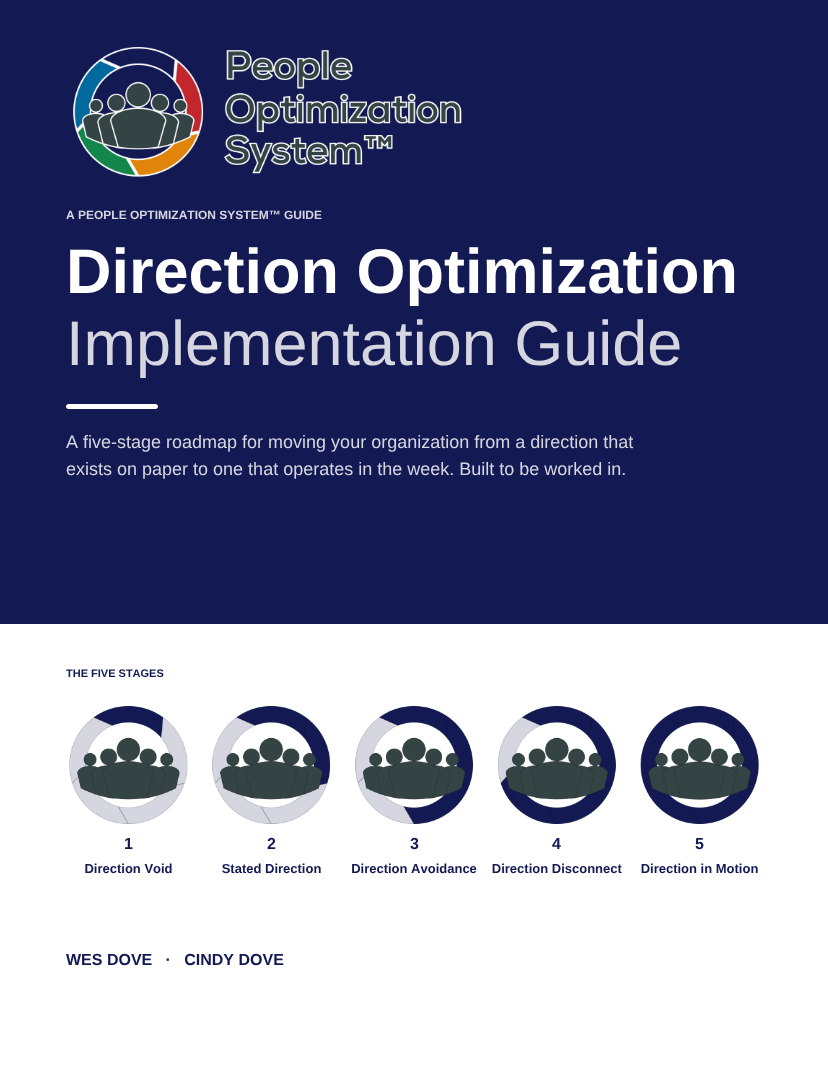
Direction Optimization
Where the organization is going, and whether everyone can say the same thing about it.
Take the assessment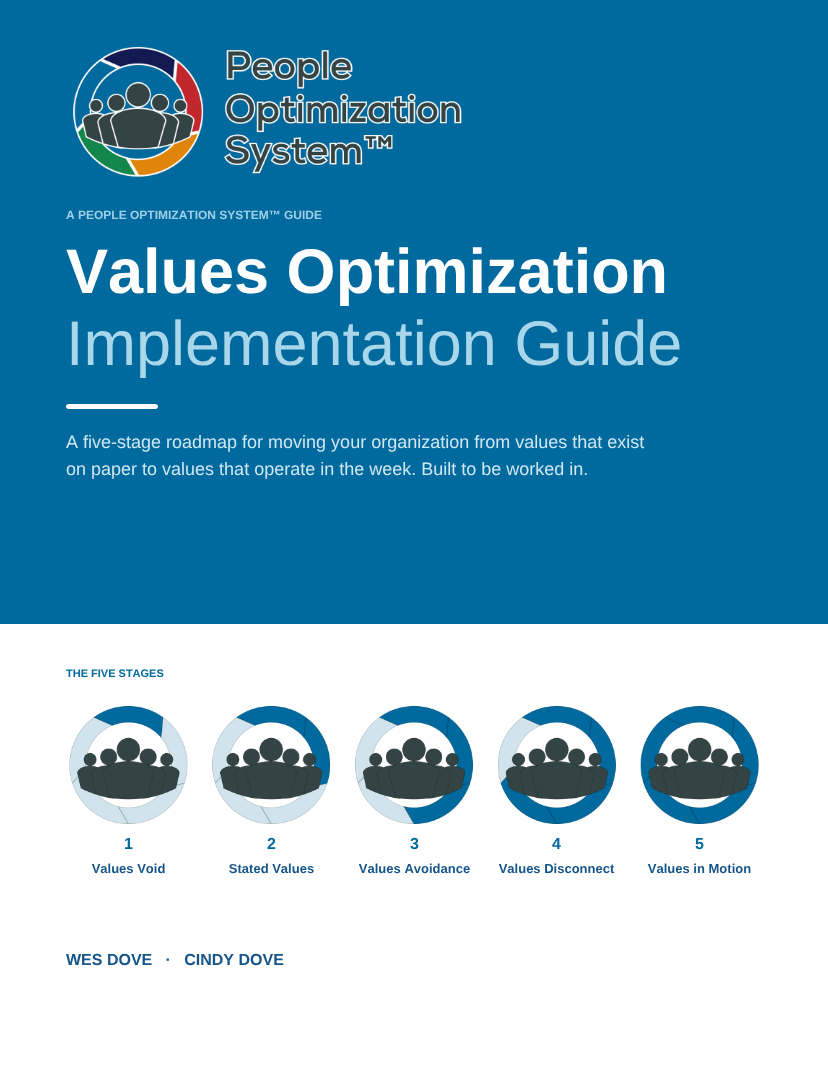
Values Optimization
Whether the standards on the wall are the standards people are actually held to.
Take the assessment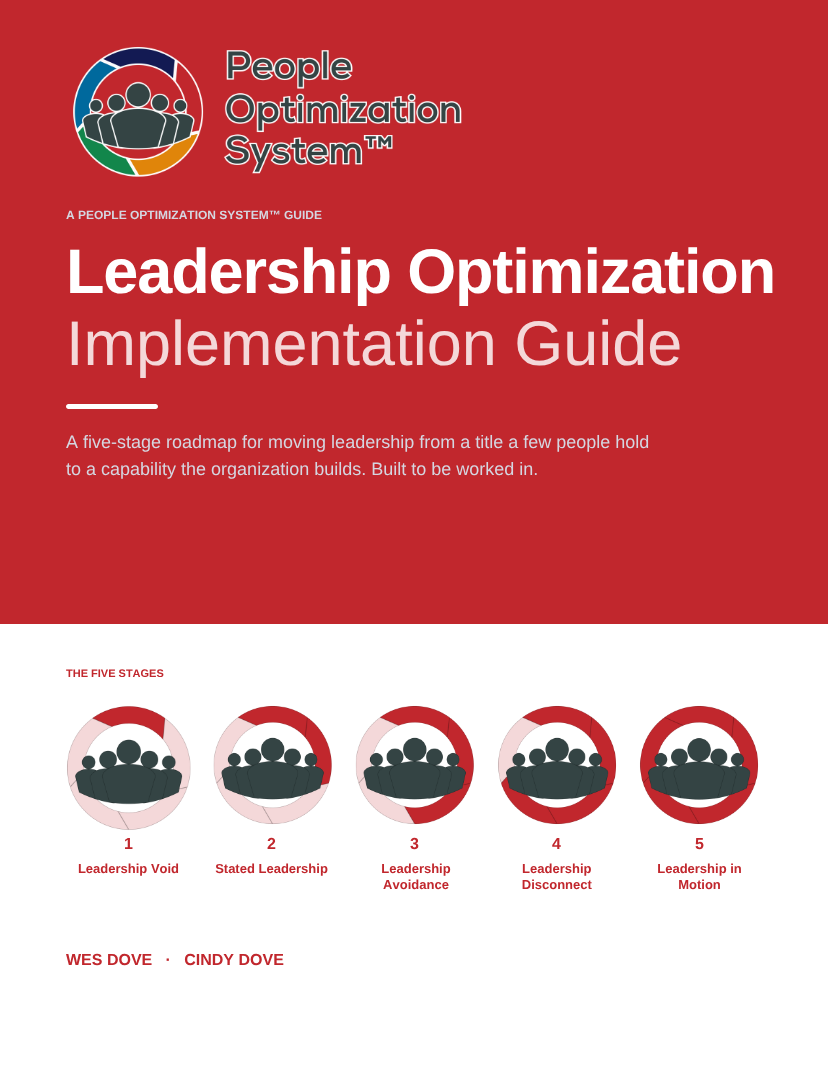
Leadership Optimization
Whether leadership is a role a few people hold or a capability the organization builds.
Take the assessment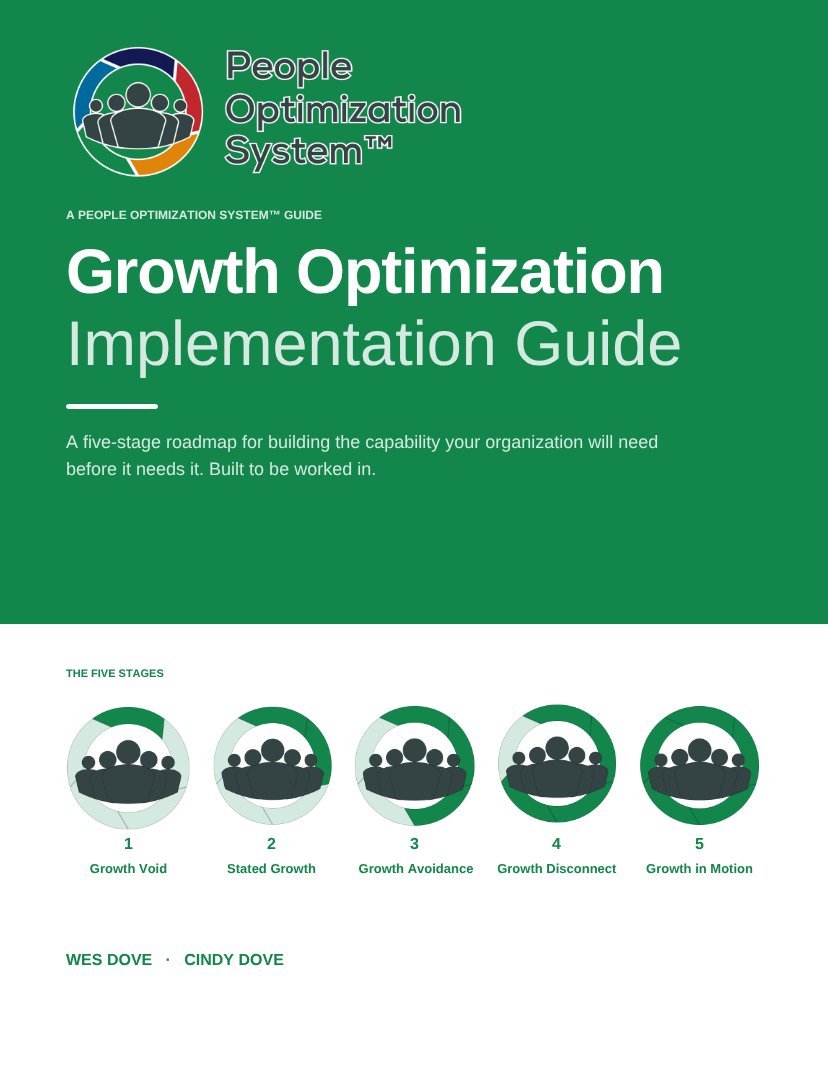
Growth Optimization
Whether capacity is growing on purpose or only when someone leaves.
Take the assessment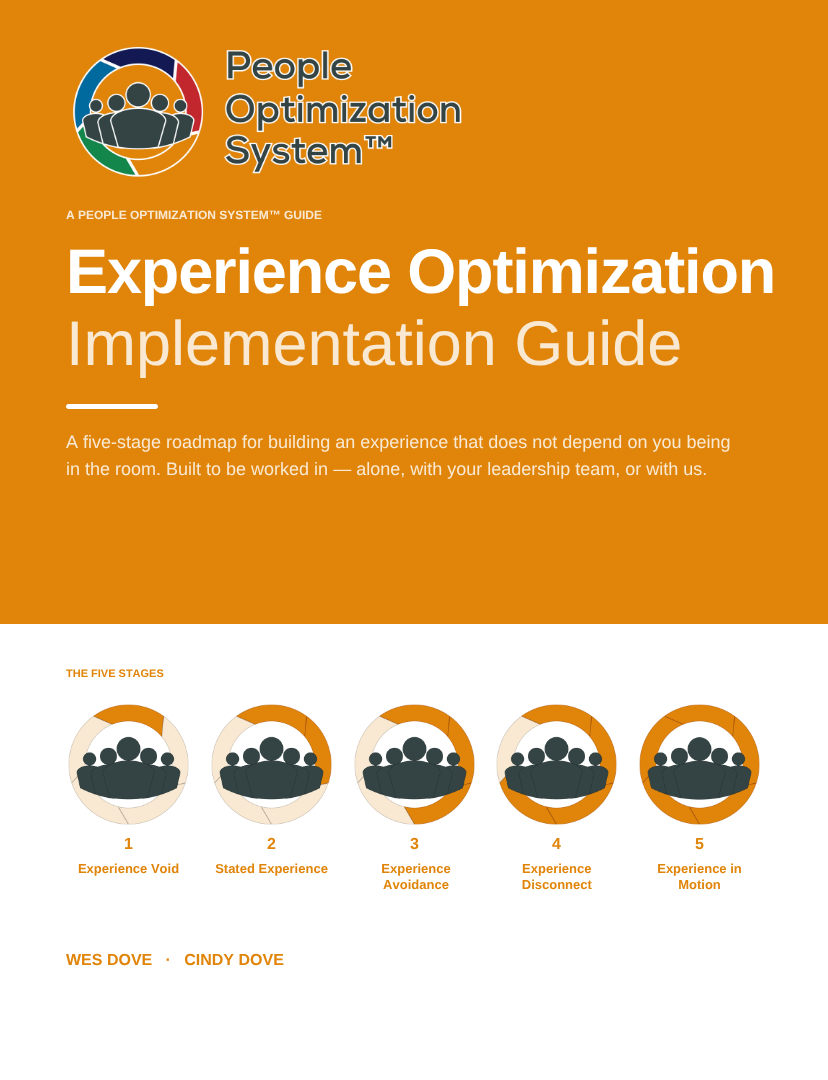
Experience Optimization
What it is actually like to work here, and why people stay or go.
Take the assessmentCommunication is not a sixth pillar
It is the mechanism every pillar runs through. In the mark it sits at the center, not on the rim, and that is the point: nothing else works without it. It has its own assessment, and it is live.
It also reads differently from the five. There are no stages and no ladder — four lenses instead, and two numbers for each: thirty questions about you, twelve about the room around you, reported separately and never averaged. Forty-two questions, ten to fifteen minutes, and nothing you enter leaves the page.
The POS Assessment also carries five questions that read how far what you set actually travels — whether it is reaching people or stopping at the first ring.
Not sure which pillar to start with?
That is what the POS Assessment is for. It reads across all five pillars, ranks them lowest first, and names the one to work on now — and it shows you the reasoning, including on the occasions when it sends you somewhere other than your lowest score. Four questions per pillar is a direction rather than a diagnosis, which is exactly what you want before committing a year to one of them.
What happens to the answers
Individual answers are never handed to the organization. Leaders see the group picture, and any group too small to stay unidentifiable is folded into a larger one before anyone sees it. That is not a courtesy. It is what makes the answers worth having, because the gap between what leadership sees and what everybody else sees is the most useful thing these assessments produce, and it only shows up when people answer honestly.
People Optimization System™ · posframework.com · Direction · Values · Leadership · Growth · Communication
